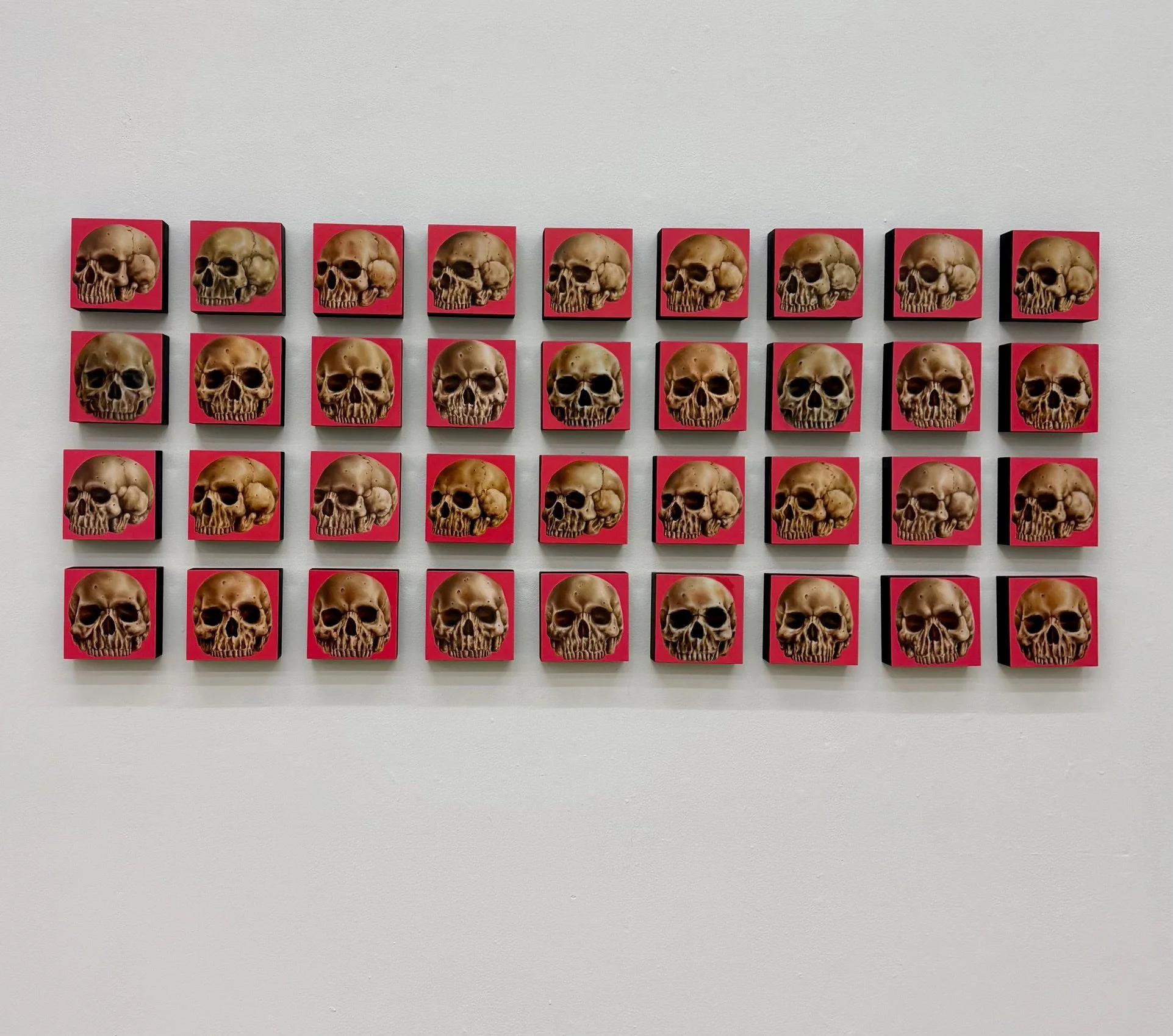
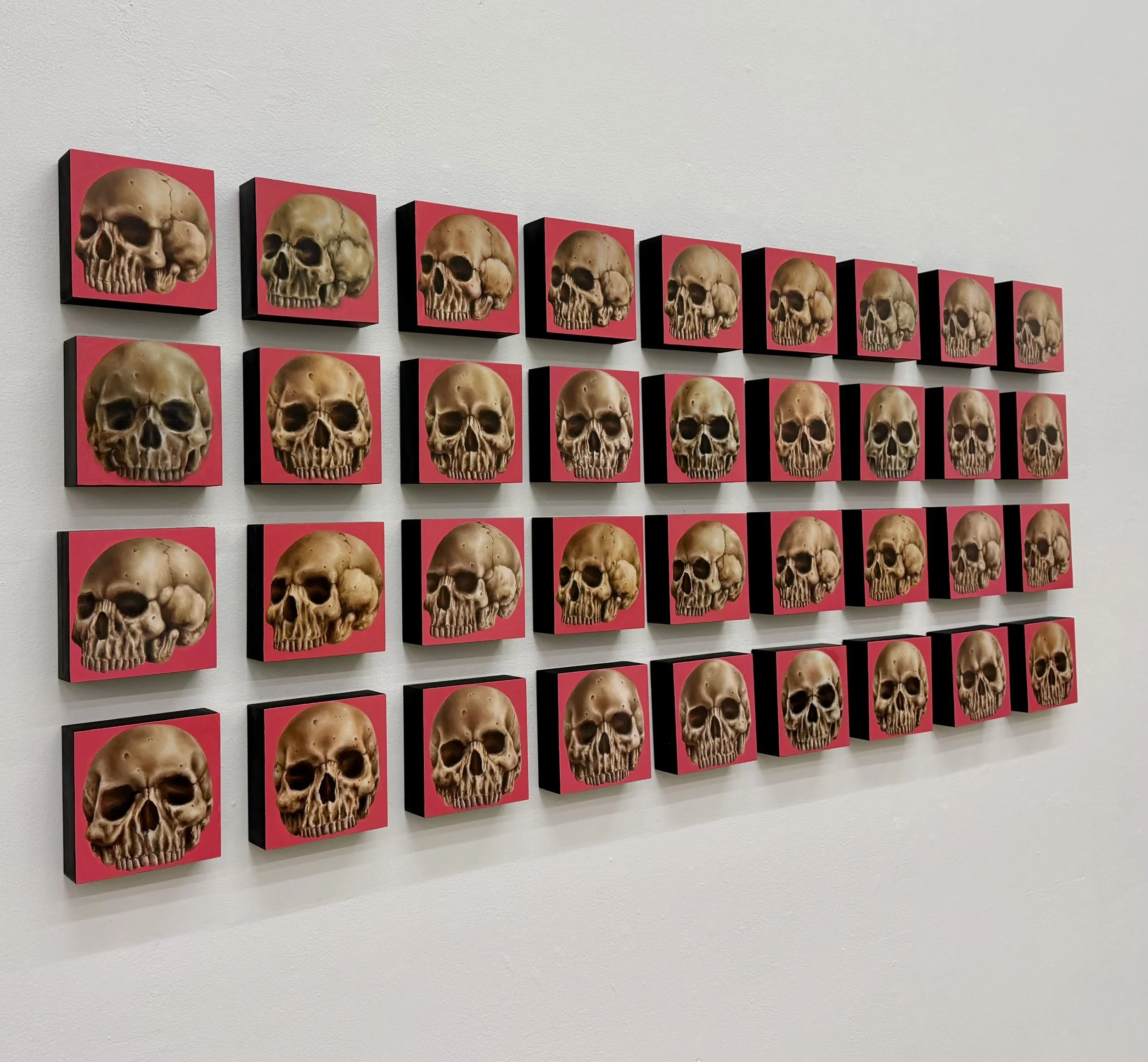
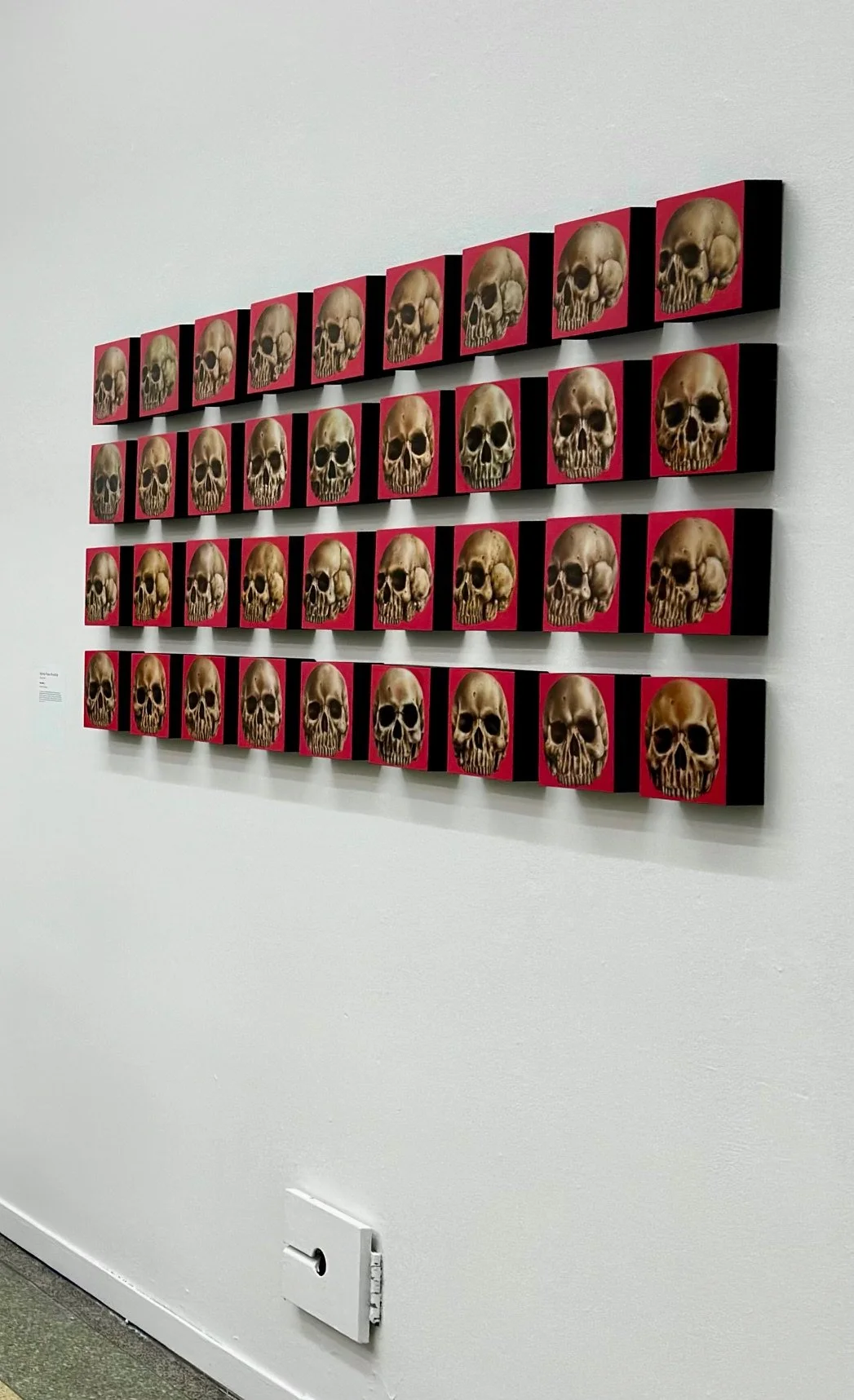

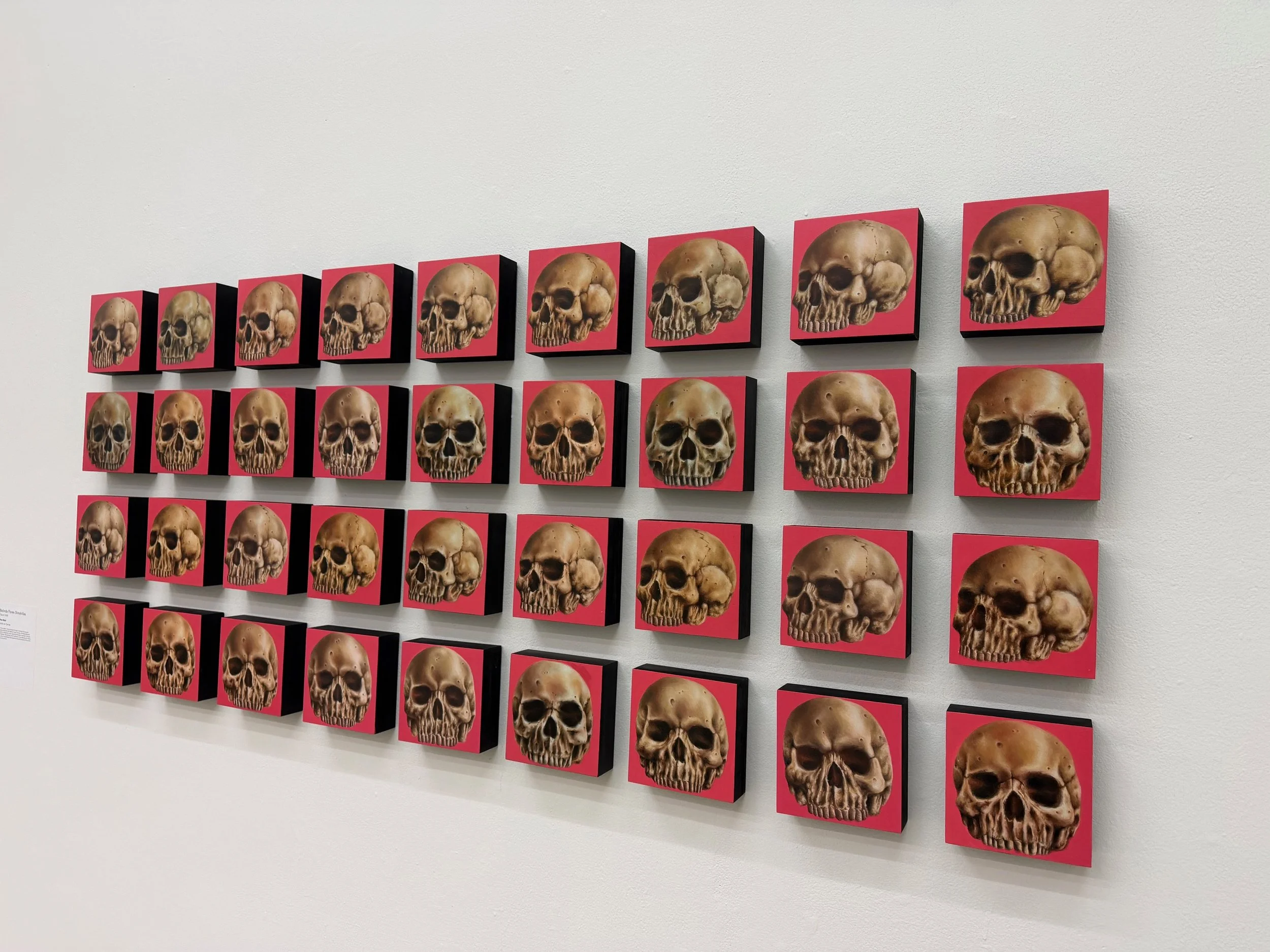
Tzompantli: Sacrifice of Many Victims
In pre‑Hispanic Mexico, the Tzompantli served as a monumental declaration of cosmic order. Constructed to display the heads of sacrificed victims, these structures affirmed the Mesoamerican belief that ritual death sustained the gods, ensured the rising of the sun, and upheld the balance of the universe. The skulls—understood as sacred offerings and “seeds” of life—embodied the cyclical relationship between mortality and regeneration. Whether carved in stone or formed from actual human remains, the Tzompantli was not a symbol of terror but a profound articulation of spiritual continuity: a testament that the cycle of death and life was honored.
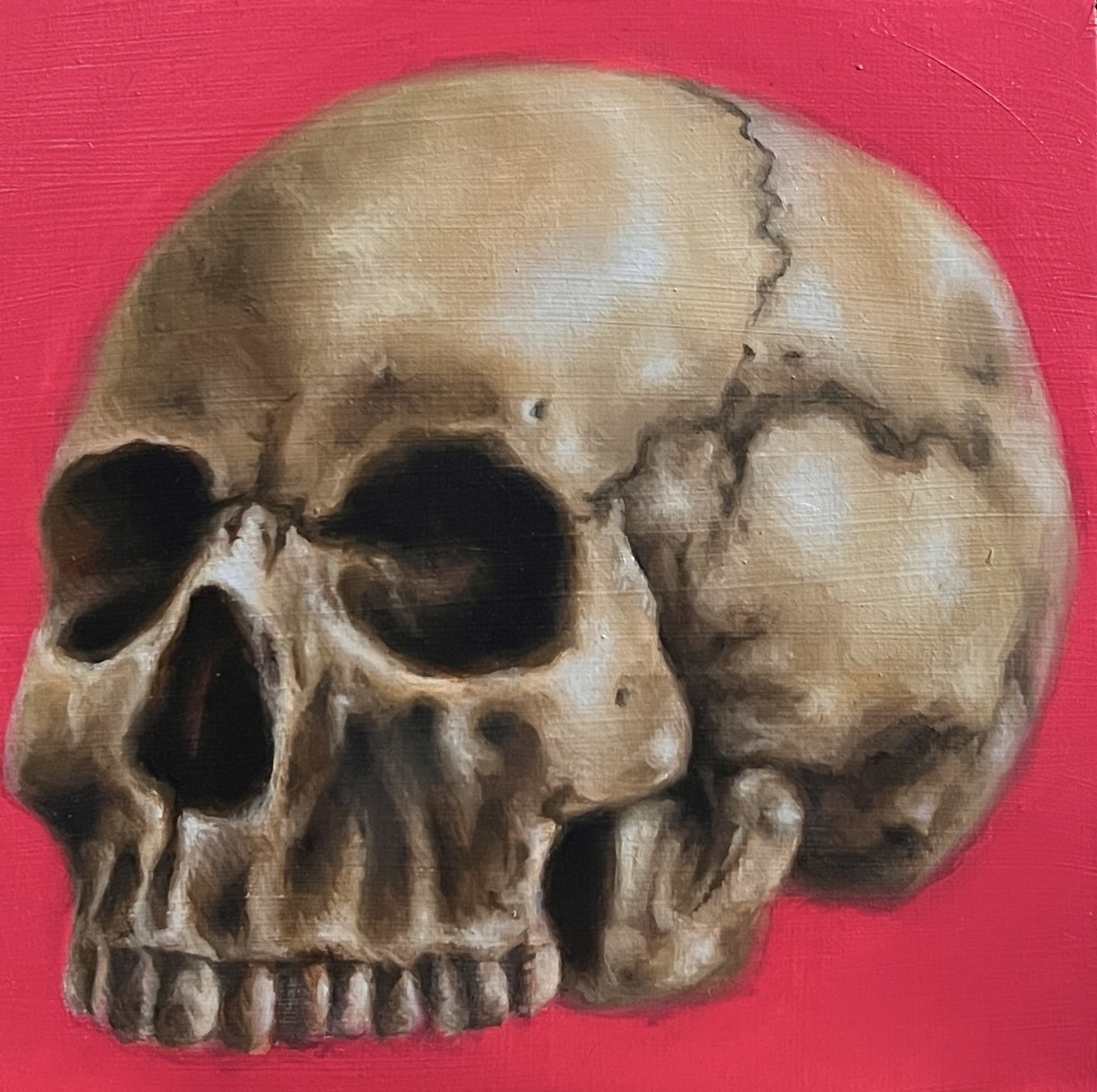
In a contemporary context, Tzompantli: Sacrifice of Many Victims reimagines this ancestral structure as a memorial to the countless women lost to femicide across Mexico and Latin America. Each faceless skull rendered on the wooden panels stands as an emblem of a life taken with impunity—an indictment of societal indifference and the pervasive normalization of gender‑based violence. The installation transforms the ritual logic of the ancient Tzompantli into a visual language of mourning, resistance, and collective remembrance.
The use of Rosa Mexicano as the background color anchors the work within the cultural and political history of Ciudad Juárez, where pink crosses became symbols of protest against the murders of women. In this installation, the color functions simultaneously as national marker and cultural critique: a vivid reminder of the country’s failure to protect its women and the enduring dominance of patriarchal structures. Paired with the stark realism of the skulls, the palette exposes the tension between beauty and brutality, devotion and apathy, identity and erasure.
Through this recontextualization, Tzompantli: Sacrifice of Many Victims becomes an offering—an act of remembrance for those who can no longer speak, and a confrontation with the societal forces that continue to sanction their disappearance. The installation insists that the cycle of death and life must be acknowledged, not through divine sacrifice, but through the urgent demand for justice, visibility, and change.
© 2023 Belinda Flores-Shinshillas